The kitchen triangle, often called the kitchen work triangle or cooking triangle, is a design concept that organizes your kitchen’s three main work zones: the sink (cleaning), the refrigerator (storage), and the stove (cooking). These form the fridge sink stove triangle, connected by imaginary lines that create a triangular workflow. The goal? To let you move smoothly between tasks without wasted steps or obstacles, like a dancer gliding across a stage.
Think of it this way: you need to chop vegetables so you’re going to need to rinse in the sink and there’s no point in wasting time reaching into the fridge for ingredients and they should be right there at your disposal; and cooking would require stove access. Setting these things in an easy triangle in kitchen layouts reduces the to-and-fro jogging that goes into a meal preparation that makes it quick and less harrowing indeed. The ‘uninterrupted flow between the appliances with no barriers’ according to Magnet Kitchens, is a principle which has governed kitchen designing for years.
Why It’s Called the Golden Triangle Kitchen
The organization of this layout is adopted for the highest possible productivity efficiency, hence the informative name golden triangle kitchen. Visual appeal is not its only advantage but also ease of performing typical activities. For instance, were you going to organize and host a dinner party, designated sink missions can become easy, among cleaning drink glasses, and chilling some beverage and standing at the stove to prepare sauce. It said that for busy families making several meals a day, this is simply life-changing. Thus, it claims that the triangle reduces the walking distance to and from each ‘must stop’ site within your kitchen, thereby increasing efficiency by turning your kitchen into a productive work center.
History and Origins of the Kitchen Design Triangle
The kitchen design triangle wasn’t born in a trendy design studio—it emerged from practical roots in the early 20th century. In the 1920s, industrial psychologist Lillian Moller Gilbreth, a mother of 12, revolutionized kitchen efficiency with her “circular routing” concept. At a 1929 women’s exposition, she demonstrated its power by preparing strawberry shortcake twice: once in a typical, disorganized kitchen (281 steps) and once in her optimized L-shaped layout (just 45 steps). Her work laid the foundation for ergonomic kitchen design.
By the 1940s, the University of Illinois School of Architecture formalized this idea into the kitchen work triangle, aiming to cut construction costs while boosting functionality. Influenced by Frederick Winslow Taylor’s Scientific Management principles, the work triangle in kitchen design focused on optimizing movement for a single cook in small domestic spaces. As Homes & Gardens explains, it was “enthusiastically adopted by kitchen designers” for its ability to streamline layouts. Today, the triangle kitchen layout remains a cornerstone, even as kitchens evolve into multipurpose spaces.
How to Create and Measure the Work Triangle in Kitchen Design
Key Guidelines for the Kitchen Layout Work Triangle
Creating a kitchen layout work triangle starts with strategic placement of the sink, fridge, and stove. Here’s how to do it right:
- Place the three points corresponding to the location of the sink, the fridge, and the stove with respect to making a loose triangle; set it up such that way each is accessible without having to walk through tables or cupboards.
- Watch the measurements. The entire perimeter of the triangle should add up to between 13 ft and 26 ft. Each side-betw een the sink and fridge, fridge and stove, or sink and stove- should measure between 4 ft and 9 ft.
- No islands, tables, or tall cabinets should be placed within the kitchen triangle paths. There must be no interference with the triangle paths by door swings and aisles.
- Minimize traffic flow across the triangle. Keep household traffic out of the kitchen work triangle as much as possible.
To visualize, sketch your layout on graph paper or use free design tools like Planner 5D. For example, in a medium-sized kitchen, place the sink under a window, the fridge against a nearby wall, and the stove along an adjacent counter, forming a balanced fridge sink stove triangle.

Common Mistakes to Avoid in the Triangle Kitchen Sink and Beyond
Even the best-laid plans can go awry. Here are pitfalls to dodge when designing your triangle kitchen layout:
- Overcrowding the triangle: Placing the sink, fridge, and stove too close (under 4 feet) can feel cramped, especially in a galley kitchen triangle. Aim for enough counter space between points for prep work.
- Ignoring room size: In a large kitchen, a kitchen design work triangle that’s too spread out (over 9 feet per side) forces unnecessary walking. Conversely, in small spaces, don’t force a triangle if a linear layout works better.
- Blocking the flow: A table or misplaced appliance in the work triangle disrupts movement. As Adrian Bergman from British Standard by Plain English warns, “there should be no interruption in the flow.”
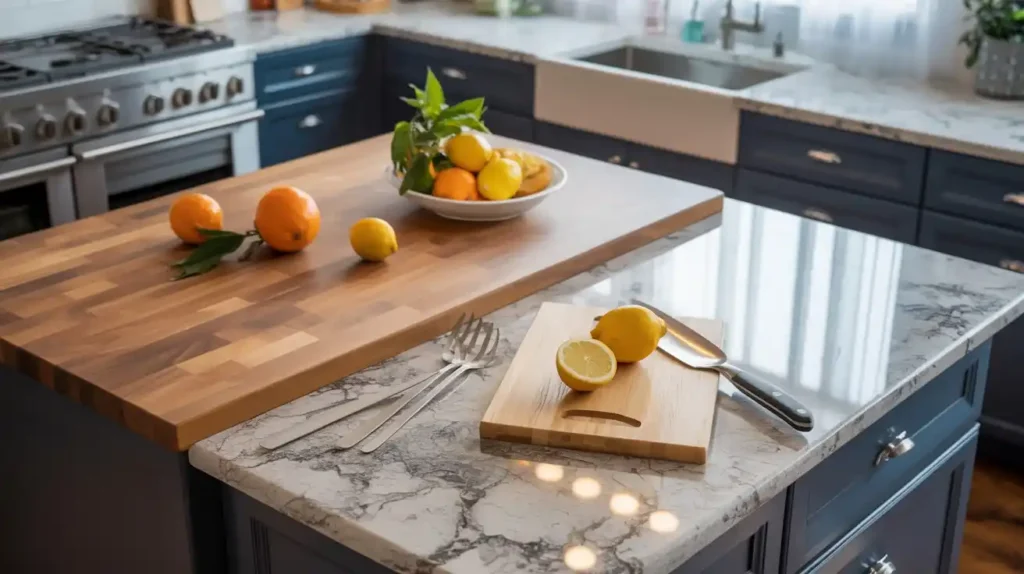
For instance, a poorly designed triangular sink placement near a corner with no counter space can bottleneck prep work. Instead, ensure each zone has adjacent workspace, as Naked Kitchens suggests, like a butcher’s block near the sink for easy food prep and cleanup.
Applying the Kitchen Triangle in Various Layouts
The Kitchen Work Triangle with Island
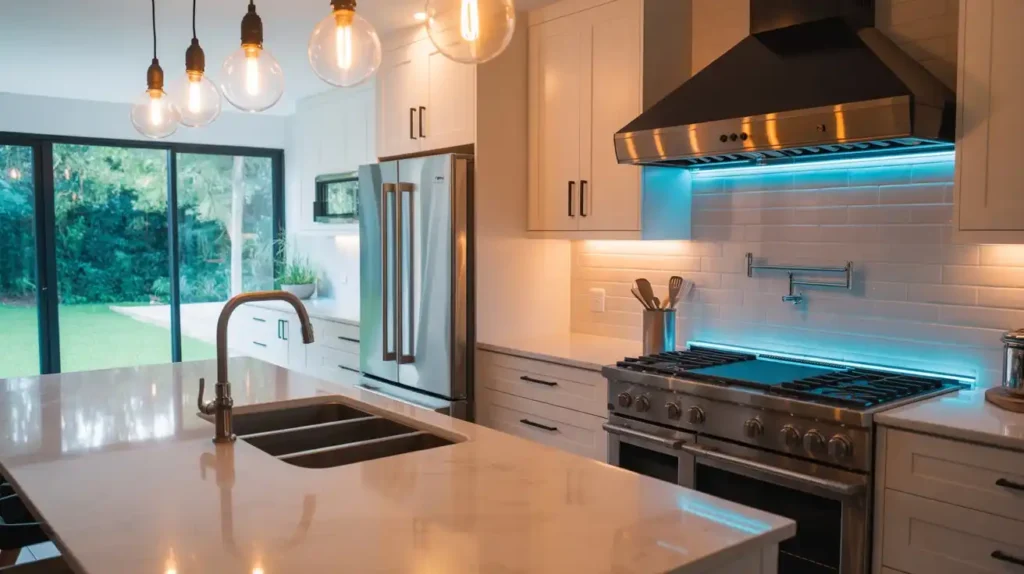
A kitchen work triangle with island can elevate both style and function, but it requires careful planning. A triangle kitchen island can serve as one of the triangle’s points—housing a sink, hob, or even an under-counter triangle corner fridge—while doubling as a prep or social hub. For example, in a spacious kitchen, you might place the hob on the island, the sink along the main counter, and the fridge nearby, maintaining the kitchen design triangle measurements.
However, islands can disrupt flow if poorly placed. Magnet Kitchens advises considering “the placement of water inlets, power sockets, and extractor fans” to ensure functionality. A real-world example: In a modern open-plan kitchen, a family installed a triangle shaped kitchen island with a sink, keeping the stove and fridge on opposite walls. This created a central prep zone without blocking the work triangle in kitchen design, perfect for multitasking during gatherings.
Galley Kitchen Triangle and Small Space Solutions
In a galley kitchen work triangle, where space is tight, the triangle’s principles still apply but may not form a literal triangle. In a single-wall or galley kitchen triangle, align the sink, fridge, and stove linearly, keeping distances within 4-9 feet. For instance, place the sink in the center, with the fridge and stove on either end, creating a streamlined kitchen workspace triangle.
For tiny spaces, consider creative solutions like a compact triangle corner fridge tucked into a corner or a small triangle kitchen island for extra counter space. Naked Kitchens suggests innovations like pull-out larder cabinets or integral chopping boards to maximize ergonomics. In a 10×10-foot galley kitchen, one homeowner added a narrow island with a triangular sink, transforming a cramped space into a functional modern kitchen work triangle.
Read Also: Creative Dining Room Wall Decor Ideas to Transform Your Space
U-Shaped, L-Shaped, and Other Triangle Kitchen Layouts
The kitchen design triangle adapts beautifully to various layouts:
- U-shaped kitchens: Ideal for zoning, place the sink on one leg, the fridge on another, and the stove on the third, forming a natural golden triangle kitchen. This setup offers ample counter space and clear zones for prep, cooking, and cleaning.
- L-shaped kitchens: Perfect for open-plan homes, position the fridge at one end, the sink in the middle, and the stove at the other, ensuring the sink refrigerator stove triangle stays compact.
- Custom layouts: In irregular spaces, bespoke designs like a triangular sink in a corner or a peninsula can maintain the triangle kitchen layout’s efficiency.

For example, a U-shaped kitchen in a suburban home used the kitchen golden triangle to create distinct zones, with a dishwasher near the sink and a pantry near the fridge, enhancing flow for a family of five.
Is the Modern Kitchen Work Triangle Outdated?
As kitchens evolve into multipurpose spaces—think home offices, dining areas, or entertainment hubs—some argue the modern kitchen work triangle is outdated. Homes & Gardens notes that today’s households often have multiple cooks, requiring “working zones” rather than a strict fridge sink stove triangle. For instance, larger kitchens might designate prep, cooking, and cleaning zones, expanding the triangle into a “kitchen rhomboid,” as Adrian Bergman humorously suggests.
Yet, the work triangle remains a solid starting point. Helen Parker from deVOL emphasizes that while aesthetics matter, functionality like the kitchen layout work triangle often “falls into place naturally” when prioritizing flow. So, is it outdated? Not quite—it’s adaptable. Ask yourself: Does your kitchen need a rigid golden triangle kitchen, or can you tweak it for your lifestyle, like adding a second sink for multiple cooks?
Modern Variations and Alternatives to The Work Triangle
Today’s kitchens demand flexibility, and the kitchen work triangle has evolved. Instead of a strict triangle, designers like Annie Ebenston from Blakes London advocate for zoning—dedicated areas for prep, cooking, and cleaning. For example, a kitchen work triangle with island might include a prep sink, while a nearby pantry houses a second fridge, breaking from traditional triangle kitchen layout rules.
Innovations enhance this flexibility: drawer fridges, pull-out spice racks, or a triangle kitchen sink integrated into a counter streamline tasks. In non-traditional spaces, like open-plan lofts, linear workflows or bespoke setups replace the galley kitchen work triangle. Naked Kitchens highlights custom cabinets that fit awkward spaces, ensuring ergonomic flow without rigid adherence to the kitchen golden triangle.
Expert Tips for Optimizing Your Kitchen Workspace Triangle
Ready to design your dream kitchen? Here are expert tips to perfect your kitchen workspace triangle:
- Zone smartly: Keep the fridge and prep area close for quick access, and place the sink, dishwasher, and bin together for efficient cleanup.
- Maximize counter space: Ensure ample worktop near the stove for chopping and plating, as Naked Kitchens suggests.
- Think family-first: Consider how many cooks use the space and whether a triangle kitchen island or extra sink fits your needs.
- Consult a pro: Book a design consultation to explore kitchen design work triangle options tailored to your space.
Start by sketching your current layout and measuring distances between your sink, fridge, and stove. Does it feel cramped or too spread out? Experiment with small changes or consult a designer to bring the kitchen golden triangle to life.
Conclusion
The kitchen triangle isn’t some quirky design thing interior designers just insist on. It’s the secret to getting a kitchen to work harder than you do. If you strategically place your sink, fridge, and oven, you’re going to create a kitchen triangle that saves time and makes life easier and better. From its birth in the 1940s to new interpretations such as the kitchen work triangle with island, it remains a major design for effective, happy spaces. Updating an L-shaped galley, golden triangle in kitchen with breakfast bar or huge open flow layouts still brings classic direction. Ready for a kitchen renovation? Analyze your space, experiment with floor plans, or partner with a professional to create a modern kitchen work triangle of your very own.
Looking for more home improvement tips? Visit Heaven Home.