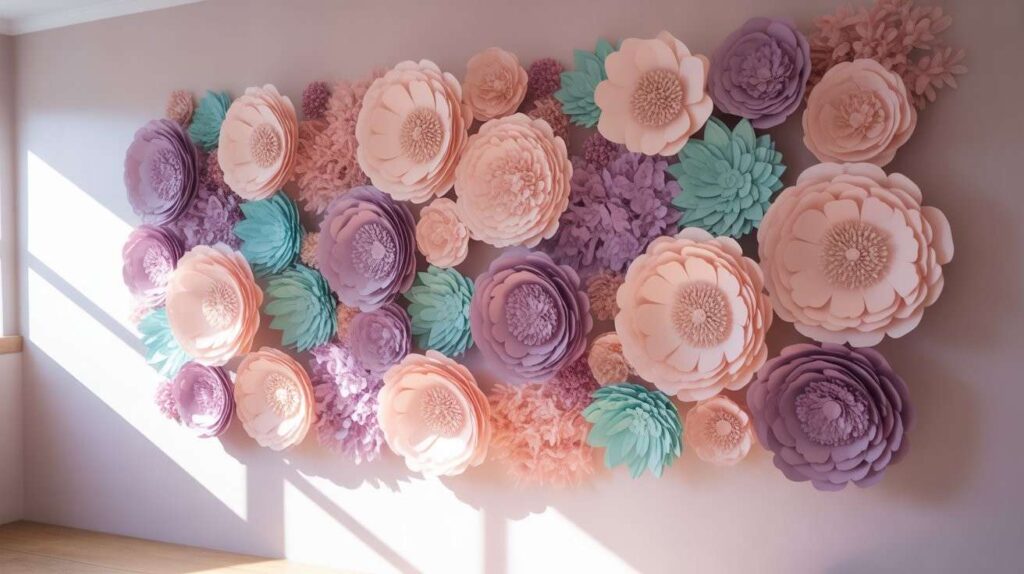
Imagine walking into a room where the walls burst with color and life, yet everything is crafted from simple, everyday materials. Paper wall flowers can transform a plain space into something magical. Whether you’re decorating a cozy nursery or adding flair to a modern office, these handmade blooms offer endless possibilities. They’re not just decorations; they’re statements of creativity and sustainability.
Paper wall flowers are floral accents made primarily from paper, designed to hang on walls for visual appeal. Unlike fresh flowers that wilt, these endure, and they’re customizable to fit any style. Their eco-friendly appeal comes from using recycled or upcycled paper, reducing waste while brightening your home.
In recent years, paper wall flowers have surged in popularity. Searches for DIY wall decor on platforms like Pinterest have jumped over 40%, driven by a shift toward personalized, budget-friendly interiors. As of 2025, trends lean toward oversized, three-dimensional designs in earthy tones and bold patterns, aligning with sustainable living movements.
This guide dives deep into everything you need to know. We’ll explore their history, benefits, materials, and a step-by-step creation process. You’ll get styling tips, maintenance advice, and even where to buy ready-made options. By the end, you’ll have actionable steps to craft your own paper flower wall art that lasts and inspires.
The History and Evolution of Paper Wall Flowers
The story of paper wall flowers begins in ancient China around 100 B.C., shortly after paper’s invention. Early artisans fashioned paper into lanterns and flowers for religious offerings, floating them on water to honor deities. This craft spread to Japan, where origami and kirigami techniques created intricate floral designs.
By the 17th century, paper flowers reached Mexico via trade routes from the Philippines. Locals adapted them into vibrant tissue paper blooms for festivals, influencing modern paper flower wall decor. In Europe, the Victorian era saw a boom in paper quilling for wall hangings. Women unraveled real flowers to replicate them in paper during off-seasons, turning necessity into art.
The early 1900s brought crepe paper flowers as affordable substitutes for real ones, especially in immigrant homes in New York where families crafted them for income. Post-war austerity revived the practice, emphasizing resourcefulness.
Today, paper wall flowers thrive amid sustainability trends. Influencers showcase oversized paper flower walls on Instagram, blending cultural elements like Mexican papel picado for heritage-inspired pieces. In 2025, with floral design trends favoring eco-conscious materials, these decorations are more popular than ever, offering a 3D alternative to flat wallpapers.
For a unique twist, draw from local traditions. Research free archives like the Library of Congress for historical patterns, then adapt them into your wall paper flowers DIY project. This adds personal depth, making your decor a conversation starter.
Benefits of Incorporating Paper Wall Flowers in Your Decor
Why choose paper wall flowers over other decor? They’re affordable, starting at under $10 for basic supplies using recycled paper. This beats pricey silk flowers or framed art, making them ideal for budget-conscious homeowners.
Environmentally, they shine. Crafting with upcycled paper reduces landfill waste—recycling one ton saves 17 trees. In a world pushing for zero-waste, paper flower wall art aligns with sustainable trends, cutting floral industry emissions.
Psychologically, floral motifs boost well-being. Studies show they trigger happiness, reduce stress, and enhance creativity. In homes, they create calming spaces, with colors like soft pastels lowering anxiety.
Unlike permanent murals, paper wall flowers offer flexibility. Renters can rotate them seasonally without damage, adapting to changing tastes. This makes them perfect for dynamic lifestyles.
To maximize benefits, start with a “mood audit.” Assess your room’s lighting and vibe, then select colors—blues for calm, yellows for energy. Use this checklist: Note existing decor, measure wall space, and test arrangements on the floor first for balance.
Essential Materials for Creating Paper Wall Flowers
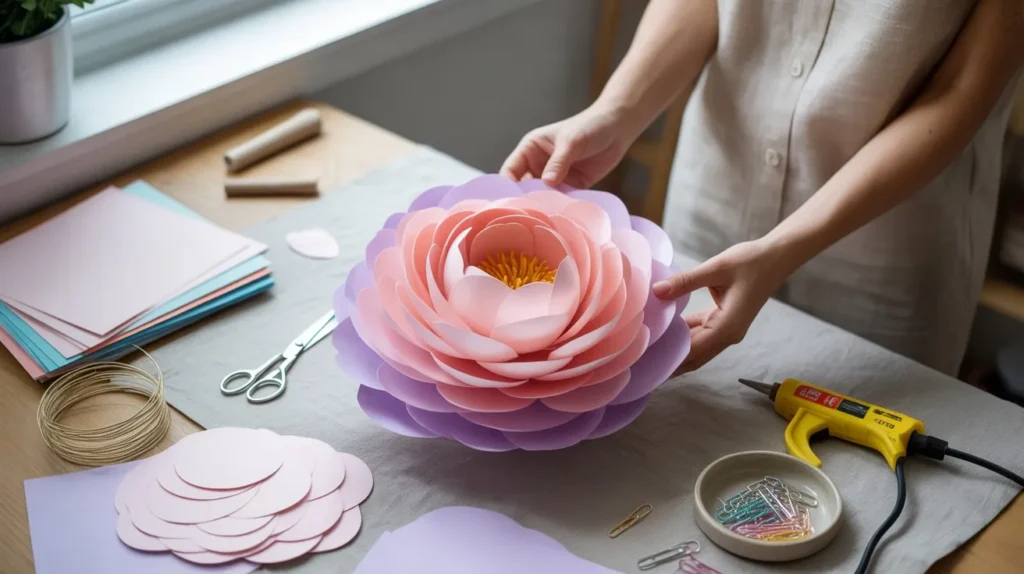
Choosing the right materials is key to stunning paper wall flowers. Start with papers: Cardstock for sturdy bases, crepe for realistic petals, and tissue for delicate layers. Opt for solid-core cardstock to avoid white edges when cut.
Tools include a hot glue gun for assembly, floral wire for stems, and scissors or a cutting machine like Cricut. For budgets, repurpose hangers as wire alternatives.
Go eco-friendly with biodegradable papers and non-toxic glues. Sustainable blogs recommend recycled options to minimize impact.
For uniqueness, try coffee filters for a dyed effect or old book pages for literary charm. This adds storytelling to your paper flower wall hanger.
Shop smart: Amazon for bulk cardstock (under $15/pack), Etsy for specialty crepe. Breakdown: $5 for paper, $10 for tools—total under $20. Store in airtight bins to prevent dust, labeling by type for easy access.
Step-by-Step Guide to Making Your Own Paper Wall Flowers
Ready to craft? Begin with simple rolled roses for your paper flowers DIY wall.
Step 1: Cut a 12-inch spiral from cardstock. For realism, fringe the edges.
Step 2: Roll tightly from the outside in, gluing the base. Fluff petals outward.
For peonies: Cut 10-15 petal layers in graduating sizes. Curl edges with a pencil, stack, and glue to a wired base. Aim for 12-18 inch diameters for wall impact.
Assembly: Cluster 5-7 flowers into a garland. Use floral tape for stems, balance with varying sizes. Attach with removable hooks to avoid wall marks.
Personalize: Dab essential oils for scent or embed LEDs for glow.
Troubleshoot: In humidity, seal edges with mod podge. Time: 2-4 hours per flower. Plan sessions to avoid fatigue, starting small for confidence.
Creative Styling Ideas for Paper Wall Flowers
Styling paper wall flowers elevates any room. Go monochromatic for minimalism or eclectic for boho.
In nurseries, use pastels above cribs for calm. Offices? Bold geometrics to inspire.
Scale matters: Oversized for feature walls, subtle for accents.
Blend with mirrors for depth or shadow boxes for art-like displays.
Create a mood board on Canva: Input “paper flower wall decor,” generate palettes. Photograph setups for Instagram, tagging #PaperWallFlowers for community feedback.

Maintenance and Longevity Tips for Paper Wall Flowers
Keep your paper flower hanging decoration pristine. Dust gently with a soft brush or compressed air monthly.
Control humidity with silica packets; avoid steamy rooms.
Repair fades with watercolor touch-ups. Store in acid-free boxes for swaps, lasting up to 5 years.
Apply UV spray to prevent yellowing.
Evolve designs annually as a personal ritual. Schedule quarterly checks; compost old pieces for sustainability.
Read Also: Ultimate Guide to DIY Christmas Decorations
Where to Buy Ready-Made Paper Wall Flowers
Short on time? Etsy offers handmade sets like purple lavender clusters for $85, with wire loops for easy hanging.
Craft stores like Michaels stock kits; online, Amazon has 18-piece bright sets for $15.
Look for thick materials and artisan reviews. Support small sellers for unique stories.

Comparison table:
| Product | Price | Style | Source |
|---|---|---|---|
| Nursery Set | $85 | Pastel Blooms | Etsy |
| Bright 3D | $15 | Vibrant Mix | Amazon |
| Pop-Up Bouquet | $20 | Eco-Paper | FreshCut Paper |
| Giant Backdrop | $100+ | Custom | Krafty Dekor |
| Craft Kit | $25 | DIY-Ready | Paper Source |
Hunt discounts with extensions like Honey.
Conclusion
Paper wall flowers bring timeless elegance and creativity to any space, blending history, sustainability, and hands-on joy. From ancient crafts to modern DIY trends, they’ve evolved into versatile decor that suits budgets and styles alike. You’ve discovered their benefits—like affordability and mood-boosting effects—along with practical guides for making, styling, and maintaining your own paper flower wall art. Whether crafting a simple rose or a full bedroom paper flower wall decor, these blooms empower you to personalize your home without environmental harm. Start small, experiment boldly, and let them reflect your story. In a fast-paced world, they remind us to pause and create beauty from the ordinary. Join the community of makers today and watch your walls come alive with charm.
What are paper wall flowers made of?
Paper wall flowers are crafted mainly from cardstock, crepe, or tissue paper for petals and bases, plus wire for support and glue for assembly. Eco-friendly versions use recycled materials to minimize waste and add durability.
How do I hang paper flower wall art without damaging walls?
Opt for removable hooks, command strips, or wire loops on your paper flower wall hanger. These methods ensure easy installation and removal, perfect for renters, while keeping walls intact and secure.
Are paper wall flowers durable?
With proper care, paper wall flowers last 3-5 years. Avoid direct sunlight and moisture; seal edges with protective sprays to prevent fading, making them a reliable choice for long-term decor.
Can I make flower paper wall decor for events?
Yes, flower paper wall pieces are ideal for weddings or parties as backdrops. Scale up sizes for impact, using vibrant colors, and they’re lightweight for easy transport and setup.
What’s the cost to start a wall paper flowers DIY project?
A basic wall paper flowers DIY setup costs under $20, including paper, glue, and wire. Use recycled items to cut expenses further, making it accessible for beginners on a tight budget.
Do paper flower wall hangers need special tools?
No special tools required beyond scissors, glue gun, and templates. A cutting machine like Cricut speeds up intricate designs, but hand-cutting works fine for simple paper flower hanging decorations.
Where to find inspiration for paper flower wall decor?
Browse Pinterest or Instagram for paper flower wall decor ideas, like 2025 trends in bold monochromes. Online tutorials and communities provide endless creative sparks tailored to your style.
Need inspiration for your next project? Find it at Heaven Home.