Imagine you’re in the middle of a family dinner prep. Onions are sizzling, dough is being kneaded, and laughter fills the air. Right there, holding it all together, are your kitchen countertops. They’re more than just flat spaces—they’re the stage for your daily adventures. Picking the best kitchen countertop material can turn your kitchen into a cozy haven or a frustrating mess. With options ranging from tough stones to warm woods, it’s a big choice. But relax; this guide will walk you through it step by step.
Why bother with the details? Well, countertops face a lot every day: hot pans, sharp knives, and sticky spills. The right one stands strong, looks great, and doesn’t need constant attention. Plus, it can make your home worth more when you sell. But what’s “best” for you might not be for your neighbor. Maybe you need durable kitchen countertops that handle kids’ homework and cookie baking. Or perhaps you’re after high quality countertops that shine during dinner parties. We’ll explore countertop material options like granite, quartz, and more, weighing their strengths and weaknesses.
This article is your roadmap. We’ll start with what makes a material top-notch, then dive into key factors for choosing. You’ll get an in-depth look at popular kitchen countertop materials, complete with pros and cons. There’s a handy comparison table, plus the latest on 2025 countertop trends. We’ll cover maintenance tips and how to decide what’s right for you. By the end, you’ll feel confident spotting the best countertop material that fits your life like a glove.
Let’s think about your kitchen dreams. Do you picture sleek, modern lines or a rustic, homey feel? Budget plays a role too—some options are wallet-friendly, others a splurge. And in today’s world, many folks want eco-friendly choices. According to recent insights, quartz is surging in popularity for its balance of style and ease. But granite holds its ground as a classic. No matter your style, the best kitchen countertops boost both function and fun. Ready to find yours? Let’s jump in.
What Makes a Countertop Material the ‘Best’?
When folks ask, “What is the best material for kitchen countertops?” it’s like asking for the best pizza topping—everyone has a favorite. The answer depends on your needs. But at its core, the best kitchen countertop material excels in strength, beauty, and simplicity.
Think of it this way: A great material is like a superhero cape for your kitchen. It should withstand daily battles without crumbling. Durability tops the list—resisting scratches, heat, and stains. Then there’s looks: Does it match your cabinets and floors? Options like veined stones add wow, while solid colors keep it calm.
Ease of care matters too. No one wants a surface that demands hours of scrubbing. Low-maintenance picks wipe clean with soap and water. Cost is key—affordable ones like laminate start low, while premium like marble go higher. And don’t forget the planet: Sustainable choices, made from recycled bits, feel good.
Common countertop choices for kitchens include natural stones (granite, marble), engineered ones (quartz), woods (butcher block), and metals (stainless steel). Each shines in different ways. For busy homes, quartz might win for its toughness. For bakers, cool marble is ideal. The “best” blends these traits to suit you. As we explore further, jot down what you value most—it’ll guide your pick.
Key Factors in Choosing the Best Kitchen Countertop Material
Choosing the best kitchen countertop material feels like picking a new pet—you want one that fits your home and habits. Here are the main things to weigh, explained simply.
Durability comes first. This means how well it handles life’s knocks. Heat from pots? Scratches from knives? Stains from berries? Tough materials like quartz shrug them off, while softer ones like wood need gentle treatment. If your kitchen buzzes with activity, go for durable kitchen countertops.
Cost and setup next. Prices range from budget laminate at $10-40 per square foot to luxurious marble at $60-150. Installation adds up—heavy stones might need experts, bumping the bill. Factor in your wallet: Is this a quick update or a long-term investment?
Maintenance ease is crucial. Some, like granite, need yearly sealing to block stains. Others, like porcelain, just need a wipe. If cleaning isn’t your jam, pick easy ones. It’s like choosing clothes—wrinkle-free saves time.
Style and options let you personalize. Want earthy vibes? Try soapstone. Modern edge? Stainless steel. Colors, patterns, and edges (like rounded for safety) make it yours. In 2025, textured finishes are hot.
Eco-friendliness counts. Look for recycled or responsibly sourced materials to lessen impact. Bamboo butcher block is renewable, for example.
Lifestyle seals the deal. Heavy cook? Heat-proof wins. Allergies? Non-porous fights germs. Blend these, and you’ll find what is the best type of kitchen countertop for you. It’s about harmony in your space.
In-Depth Look at Popular Kitchen Countertop Materials
Let’s meet the contenders up close. We’ll cover eight countertop materials pros and cons, with real-life perks and pitfalls. Each suits different kitchens, so picture them in yours.
Granite: The Reliable Rock Star
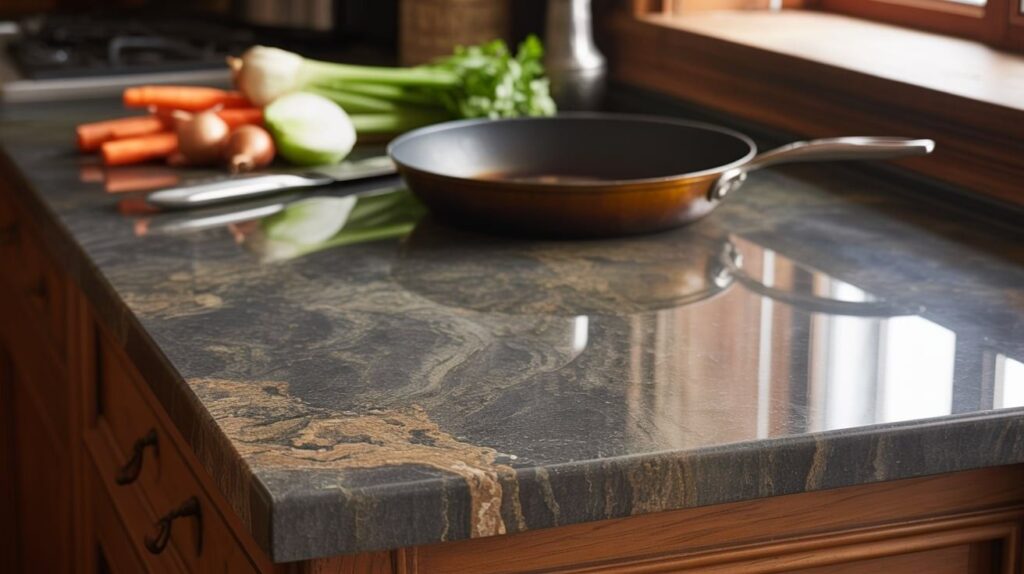
Granite, cut from earth stones, offers unique patterns like speckles or swirls. It’s a go-to for the best kitchen countertops thanks to its heat resistance—you can set hot dishes down safely.
Pros: Tough against scratches and chips when sealed. Boosts home value with natural beauty in many colors. Cleans easily with mild soap. Cons: Requires annual sealing to prevent stains; heavy, so pro install costs more ($40-100 per sq ft). Can crack under extreme force.
Envision granite in a lively kitchen—it feels solid and timeless. Ideal for everyday use, but mind the upkeep for spills.
Quartz: The Smart Engineered Choice
Quartz mixes ground stone with resins for consistent looks. It’s non-porous, making it a top pick for the best countertop material in busy spots—no bacteria hideouts.
Pros: Resists stains and scratches; no sealing needed. Uniform designs mimic nature. Heat-tolerant somewhat ($50-120 per sq ft). Cons: Use trivets for super-hot items; can fade in sun.
See it brightening a family kitchen—forgiving and stylish. Great for low-fuss lives.
Marble: The Luxe Looker
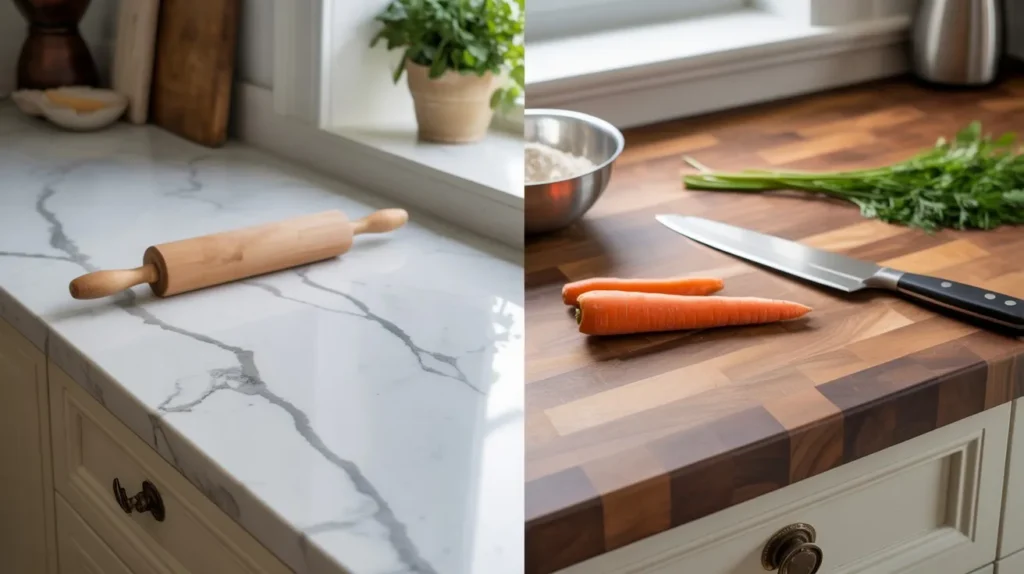
Marble’s veined elegance comes from natural stone, cool for pastry work. But it’s not always the best kitchen countertop material for rough use.
Pros: Timeless charm; heat-resistant. Can be matte or shiny ($60-150 per sq ft). Cons: Stains from acids like vinegar; scratches easily; seals often.
Picture it in an upscale setup—gorgeous but needs pampering. Fine for light cooks.
Butcher Block: The Cozy Wood Wonder
Wood pieces glued tight make butcher block, perfect for direct chopping. It warms up spaces, a solid choice among kitchen countertop materials.
Pros: Knife-kind; affordable ($30-70 per sq ft); sands out dings; eco if sustainable. Cons: Oils monthly to avoid warping; not heat-proof; bacteria risk if neglected.
In a country kitchen, it’s inviting. Suits chefs who love natural feels.
Soapstone: The Vintage Charmer
Dense soapstone has a soft, gray tone that patinas over time. It’s heat-safe and stain-resistant after oiling, a hidden gem for durable kitchen countertops.
Pros: Non-porous post-treatment; unique aging ($70-120 per sq ft). Cons: Scratches softly (sandable); limited shades.
Fits historic homes—grows character. For those who embrace imperfections.
Porcelain: The Tough Trendsetter
Baked clay slabs make porcelain lightweight yet strong. It’s rising in 2025 for mimicking stones affordably.
Pros: Heat, scratch, stain-proof; versatile designs ($50-100 per sq ft). Cons: Edges chip; needs skilled install.
Modern kitchens love its clean durability. Versatile for bold styles.
Stainless Steel: The Chef’s Ally
Metal sheets give a pro feel, seamless and hygienic. Among countertop material options, it’s unbeatable for sanitation.
Pros: Germ-free; heat-resistant; easy clean ($75-150 per sq ft). Cons: Scratches, fingerprints show; dents possible; noisy.
Busy cooks swear by it—practical power.
Laminate: The Smart Saver
Plastic layers over board, printed any way. It’s the budget king for starting out.
Pros: Cheap ($10-40 per sq ft); easy install; endless looks. Cons: Burns, swells with water; less sturdy.
Rentals or first homes benefit—functional without flair.
Read Also: Creative dining room decorating ideas that will upgrade your space
Comparison Table of Kitchen Countertop Materials
Here’s a clear table to compare at a glance. It sums up key points for quick decisions.
| Material | Cost per Sq Ft | Durability (1-10) | Pros | Cons |
|---|---|---|---|---|
| Granite | $40-100 | 9 | Heat-resistant, natural variety | Needs sealing, heavy |
| Quartz | $50-120 | 9 | Stain-proof, low maintenance | Heat-sensitive somewhat |
| Marble | $60-150 | 7 | Elegant veins, cool touch | Stains, scratches easily |
| Butcher Block | $30-70 | 6 | Choppable, warm feel | Requires oiling, warps |
| Soapstone | $70-120 | 8 | Ages beautifully, heat-safe | Soft scratches |
| Porcelain | $50-100 | 9 | Versatile, durable | Chips on edges |
| Stainless Steel | $75-150 | 8 | Hygienic, seamless | Shows marks, dents |
| Laminate | $10-40 | 5 | Affordable, design options | Not heat/water resistant |
Based on expert rundowns, quartz and granite lead for toughness. Use this to match your top priorities, like cost for laminate or style for marble.
2025 Trends in Kitchen Countertop Materials
2025 brings fresh vibes to countertops, mixing nature and innovation. Natural stones like granite evolve with honed finishes for a soft, modern twist. Quartz leads with warm tones—creamy bases laced with gold or cinnamon veins.
Porcelain surges for its eco-edge and stone-like looks without the weight. Wood counters, like butcher block, add organic warmth. Colors pop: Think vibrant greens, blues, and earthy hues over plain white.
Textures rule—leathered or matte surfaces feel touchable and hide fingerprints. Sustainable picks, from recycled quartz to bamboo, appeal to green thumbs. Bold patterns, like dramatic veining, make statements. Soft edges, curved for flow, soften sharp lines. If updating, these keep your kitchen current yet timeless.
Maintenance and Care for Your Chosen Material
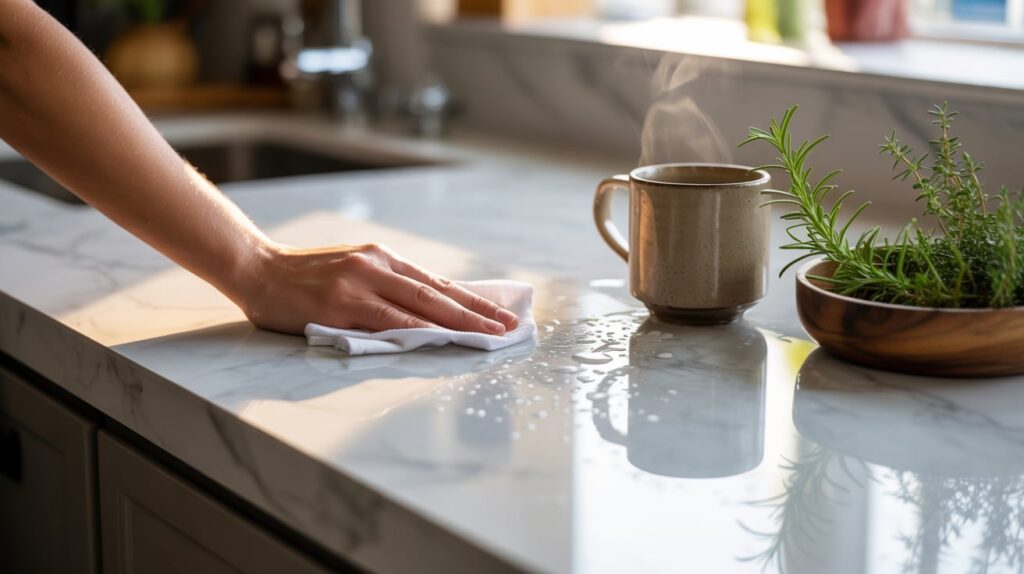
Keeping countertops happy is simple with right habits. Always wipe spills quick with warm water and mild dish soap—avoids most issues. Skip harsh scrubs; they dull shines.
For granite and marble: Seal yearly; use coasters for drinks. Quartz: Just wipe—no extras. Butcher block: Oil monthly; dry well. Soapstone: Mineral oil enhances patina. Porcelain and laminate: Gentle cleaners; avoid heat. Stainless: Vinegar buffs fingerprints; soft cloths prevent scratches.
Daily: Soft cloth routine. Weekly: Deeper clean with baking soda paste for tough spots. Cutting boards and trivets protect all. These steps make your best countertops last decades.
How to Decide on the Best Kitchen Countertop Material for You
Decision time? Follow this guide. First, list needs: Cooking frequency? Budget? Style?
Touch samples at stores—feel tells truth. Read reviews; ask pros about local fits. Balance factors: Quartz for ease, granite for value.
Questions: Heat needs? Maintenance time? Eco goals? Narrow to 2-3, compare costs. Your choice should excite you daily.
Conclusion
From granite’s grit to quartz’s ease, we’ve unpacked countertop choices. The best kitchen countertop material matches your rhythm—durable for chaos, elegant for calm.
Assess your space now. Pick one that sparks joy. Your kitchen awaits its upgrade—go make it shine!
Get more creative home decor ideas at Heaven Home.