Imagine turning a quiet corner of your home into a lively spot for mixing drinks and sharing laughs. A DIY home bar does just that. It brings the fun of a night out right to your doorstep. No more rushing to crowded pubs. Instead, you host friends with ease.
Home bars have surged in popularity lately. With more people entertaining at home, these setups offer a personal touch. They save money on outings too. Plus, they add value to your space. Think about it: a custom bar can transform a basement or kitchen nook into a go-to hangout.
Building your own DIY home bar has clear perks. It’s cheaper than buying pre-made furniture. You control the design to fit your style. Want a rustic vibe? Or something sleek and modern? It’s all up to you. This project also builds skills. You’ll learn basic woodworking while creating something useful.
But it’s not just about drinks. A DIY home bar can double as a coffee station or family game area. It’s versatile for any occasion. In 2025, trends lean toward sustainable materials and smart features. Low-ABV cocktails and global flavors are hot. Your bar can reflect these.
This guide walks you through every step. We’ll cover planning, materials, and construction. Then, stocking and styling tips. By the end, you’ll have a functional, eye-catching DIY home bar. Ready to start? Let’s dive in. Whether you’re a beginner or handy, this is your roadmap to crafting the perfect entertainment hub.
Planning Your DIY Home Bar
Starting a DIY home bar project needs solid planning. It’s the foundation for success. Skip this, and you might face costly fixes later.
Assessing Space and Location
First, look at your home. Where will the bar fit best? Basements offer privacy and room for expansion. Living rooms keep it social. Kitchens integrate well for easy access to sinks. Even gardens work for outdoor vibes, using weather-resistant materials.
Measure the area. Aim for at least 4-6 feet wide and 2 feet deep. This allows comfortable serving. Consider traffic flow. Place it near seating to encourage mingling. Check for utilities like outlets or plumbing. If adding a sink, proximity matters.
Think about lighting. Natural light brightens the space. But dimmable LEDs create ambiance for evenings. Ventilation is key too, especially indoors. Avoid cramped spots that feel stuffy.
In 2025, compact designs rule for small homes. Mobile carts suit apartments. Fixed counters work for larger areas. Evaluate how the bar blends with your decor. It should enhance, not clash.
Setting a Realistic Budget
Budgets keep projects on track. Start low: basic DIY home bars cost $100-$500. Factor in materials, tools, and extras.
List essentials. Lumber might run $50-$150. Tools add up if buying new. Barware and spirits push totals higher.
Save by repurposing. Use old shelves or pallets. Shop sales at home stores. Thrift shops yield cheap finds like stools.
Track expenses. Apps help monitor costs. Allocate 50% to build, 30% to stock, 20% to decor. Unexpected issues? Add a 10-20% buffer.
In today’s market, inflation affects prices. But deals abound online. Wholesale clubs cut bulk costs for spirits.
Choosing a Design Theme
Themes make your DIY & crafts home bar truly unique. Rustic styles use wood and earthy tones, modern designs favor clean lines and metals, while a speakeasy theme adds mystery with dark hues.
Match your home’s style. Tiki brings tropical fun with bamboo. Industrial uses exposed pipes.
For 2025 trends, go sustainable. Recycled materials shine. Bold colors like deep blues pop. Tech like app-controlled lights elevates it.
Decide: fixed or mobile? Carts move easily. Fixed offers more storage.
Sketch ideas. Use apps for visuals. This ensures your vision aligns with space and budget.
Essential Materials and Tools for a DIY Home Bar
Gathering the right stuff is crucial. It ensures a smooth build. Focus on quality without overspending.
Key Materials
Start with lumber. 2x4s form sturdy frames. MDF boards make smooth bartops. Pallets offer cheap, rustic options. Shiplap cladding adds charm.
For surfaces, butcher block resists wear. It’s affordable at $20-$50 per sq ft. Plywood works for bases. OSB sheeting provides strength on a budget.
Decorative bits: paints for color. LED strips for lighting. Repurposed furniture like old cabinets saves cash.
In 2025, eco-friendly choices trend. Bamboo or reclaimed wood reduces impact. Waterproof sealants protect against spills.

Must-Have Tools
Basics include a saw for cuts. Screw gun for assembly. Level ensures straightness. Router smooths edges.
Miter saw handles angles. Tape measure avoids errors. Sander preps surfaces.
Safety gear: glasses, gloves, ear plugs. Borrow tools to cut costs. No need for fancy gear—keep it simple.
Sourcing on a Budget
Home stores like Lowe’s stock essentials. Thrift shops have hidden gems. Online marketplaces offer deals.
Salvage yards provide unique pieces cheap. Flea markets yield vintage vibes.
Buy in bulk for discounts. Watch for sales. Repurpose household items—like using a bookshelf as shelving.
Step-by-Step Guide to Constructing Your DIY Home Bar
Time to build. Follow these steps for a solid result. Take it slow. Measure twice, cut once.
Building the Frame
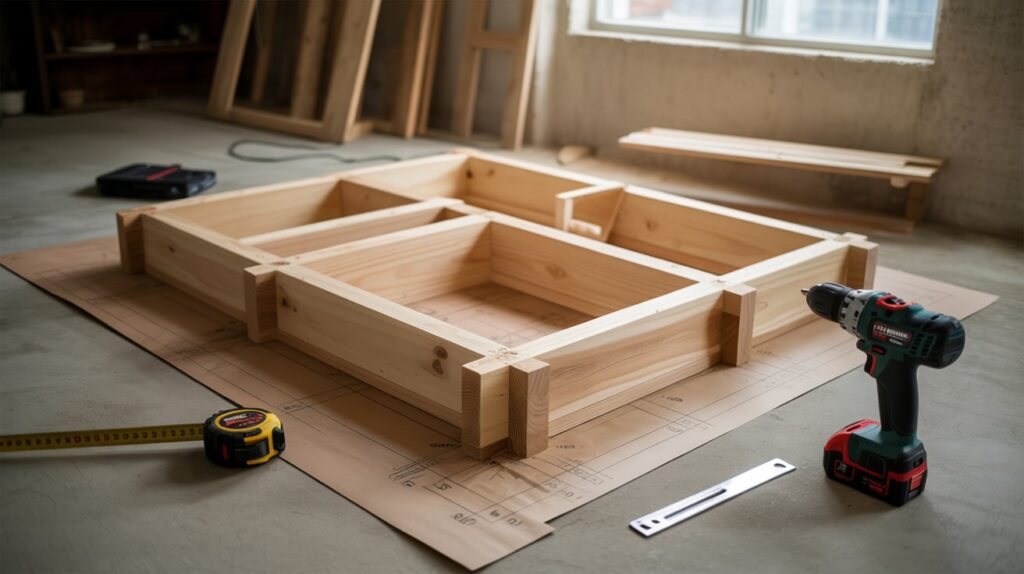
Layout first. Tape the floor to visualize. Decide height: 42 inches standard.
Cut 2x4s for plates. Mark every 16-24 inches for studs. Cut studs to height minus plates.
Assemble like a wall. Screw studs in. Stand and level. Secure to wall or floor.
For stability, add cross braces. This prevents wobble.
Creating the Bartop and Supports
Build supports. Use 2x4s for a ladder-like base. Cantilever for overhang—10 inches front, 8 back.
Cut boards for top. MDF or fir. Clamp and screw from below. Router edges for smoothness.
Add shelves. Cleats hold them. Place at 26 inches for easy reach.
Adding the Front Face and Finishes
Clad with shiplap. Start vertical, then horizontal. Nail in place.
Sand all. Use 40-100 grit. Apply linseed oil or sealant. This protects and shines.
Paint if desired. Choose durable finishes.
Custom Additions
Wing walls for enclosure. Mobile wheels for flexibility.
Troubleshoot: Uneven? Shim. Flexing? Brace.
Add trends: USB ports. LED underlighting. Wet sink if plumbing allows.
Safety: Round edges. Secure firmly.
Stocking and Equipping Your DIY Home Bar
With the build done, stock up. Essentials make mixing easy.
Essential Barware and Glassware
Basics: shaker, jigger, strainer. Muddler, spoon.
Glassware: rocks, highball, wine. Versatile sets cost $20-$50.
DIY: Custom stirrers from beads.
Selecting Spirits and Mixers
Core: vodka, gin, rum, whiskey. Add tequila, mezcal for trends.
Budget: Store brands. Mini bottles to try.
Mixers: Tonic, soda. Homemade syrups save.
2025 trends: Low-ABV options. Tea-based. Spicy infusions.
Garnishes and Accessories
Herbs, fruits. Ice bucket.
Storage: Trays organize. Menu board lists drinks.
Styling and Decorating Your DIY Home Bar
Make it inviting. Style ties it together.
Themed Decor Ideas
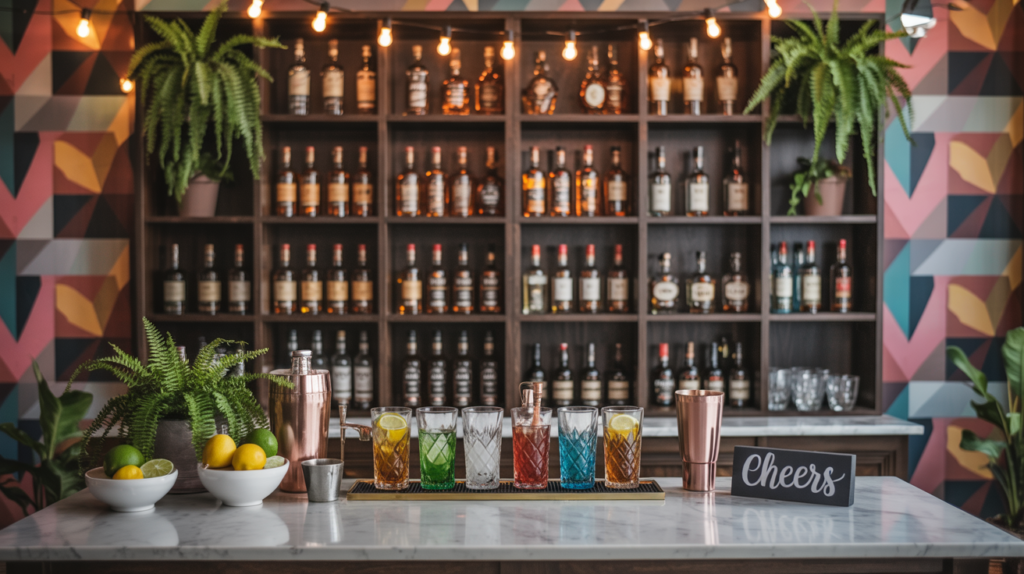
Lights: String or pendant. Plants add life.
Artwork: DIY signs. Photos personalize.
Trends: Bold patterns. Eclectic mixes.
Organization Tips
Neat shelves. Labels help.
Multi-use: Cocktails or coffee.
Maintenance and Advanced Tips for Your DIY Home Bar
Clean weekly. Wipe spills fast. Reseal wood yearly.
Upgrades: Smart lights. Expand storage.
Avoid pitfalls: Overstock. Ensure ventilation.
Safety: Lock spirits if kids around.
Conclusion
Building your own DIY home bar is more than just a weekend project—it’s an investment in creating memorable moments right at home. From the first sketch to the final coat of paint, every step reflects your personal style and creativity. Whether you’ve chosen a rustic, modern, or tropical theme, your bar can become the centerpiece for gatherings, a cozy coffee nook, or even a stylish family game area. With careful planning, smart budgeting, and the right tools, you’ve crafted a space that’s both functional and inviting. As trends in 2025 embrace sustainability, tech-savvy features, and global drink flavors, your setup can easily adapt and evolve. Keep it well-stocked, maintain it regularly, and don’t be afraid to add new touches over time. Most importantly, enjoy the process and the people it brings together. Your DIY home bar isn’t just furniture—it’s a hub for laughter, connection, and unforgettable memories. Cheers to your creation!
Explore more creative home improvement ideas at Heaven Home.