Hey there, fellow home tinkerers and décor dreamers—I’m Alex, a guy who’s spent the better part of two decades turning fixer-uppers into cozy sanctuaries. Back in my early days as a newbie homeowner in a drafty Victorian in upstate New York, I remember huddling under blankets every winter, feeling like my front door was auditioning for a wind tunnel. That all changed the day I finally tackled weatherstripping my exterior door. It wasn’t just about sealing out the cold; For my energy bill, the bugs entering my home, and even that last bit of shine in my entryway to create an appealing space that welcomes you in, and keeps visitors looking around a little longer – it was, quite literally, a game-changer. If you’re anything like me – and by that, I mean an interiors fanatic who adores hands-on projects that marry purpose with panache – then consider this your holy grail.
In the world of home improvement, few tasks pack as much punch as learning to weatherstrip an exterior door. It’s a DIY win that slashes drafts by up to 20% according to the U.S. Department of Energy, keeping your home snug without breaking the bank or calling in pros. But beyond the stats, it’s about crafting a space that feels intentional. We’ll dive deep into types of weatherstripping, hands-on installation steps tailored for the bottom, jambs, and thresholds, troubleshooting hiccups, and even stylish hacks to make your seal pop against your décor scheme. Whether you’re eyeing an exterior door weatherstrip kit from Home Depot or hunting the best weatherstrip for exterior door setups, I’ve got the insider tips from my trial-and-error adventures. Let’s roll up our sleeves and turn that leaky portal into a welcoming fortress.
Why Weatherstrip Your Exterior Door? The Hidden Perks Beyond Just Staying Warm
It is the middle of autumn outside, and leaves are falling all over the place. Inside, it is freezing, and you can feel your feet beginning to curl up on the bare hardwood floor. This is what an unsealed outer door can do, and trust me, I know this because I have lived in three homes since then. Weatherstripping is not a problem but a necessity in any efficient and stylish home. For starters, energy savings A well weather-stripped door can reduce winter heating costs by 10% to 15% and keep that expensive air-conditioned air inside ENERGY STAR, New weather stripping cut my utility bill by $45 per month in the last reno—that’s $45 better spent on that velvet throw pillow I’ve got my eye on.
But it’s not all numbers. Think pest patrol: Those tiny gaps? Prime real estate for ants, spiders, and worse during humid spells. I once traced a summer ant parade straight to my unweatherstripped threshold—lesson learned. Noise reduction is another gem; a good exterior door weatherstrip seal muffles street hum, turning your foyer into a serene entry for après-work unwinding. And for us décor folks, it’s a canvas: Choose bronze-toned strips to echo your mid-century modern hardware, or soft white vinyl to blend with farmhouse shiplap.
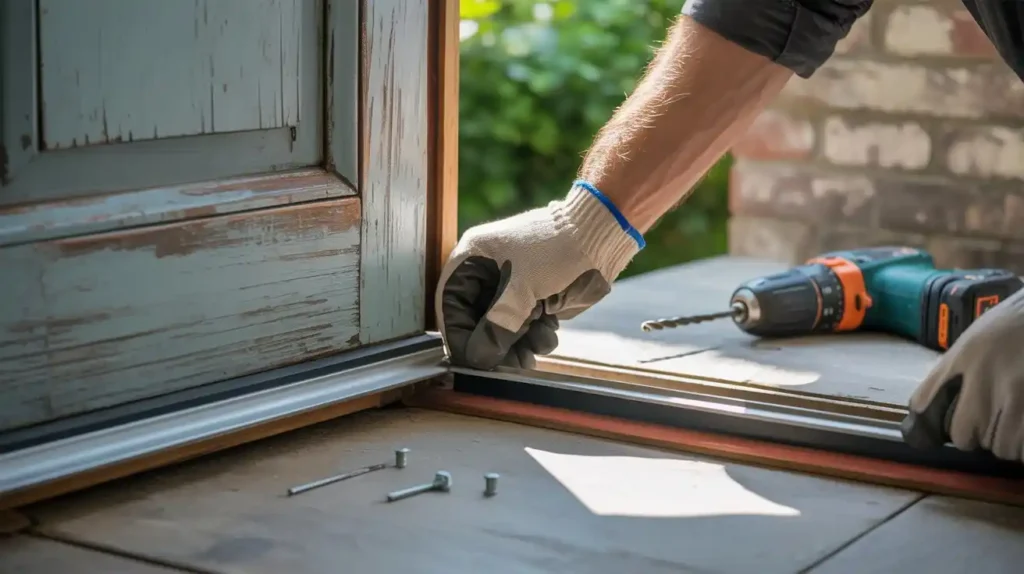
Environmentally, too, since there’s less energy waste, and hence a lighter carbon footprint. People in my local DIY group have sworn by it to increase home value; appraisers notice those tight seals during inspections. The bottom line: I’ve patched it more times than I’d like. The other problem with skipping weather-stripping: moisture problems such as peeling paint or warped frames from the repeated patches. Right now, then, weather-stripping your exterior door is a matter of health for your home. It’s fast (most take under two hours to do), it’s cheap (kits start at $15), and it’s oh so vindicating when that first totally solid whoosh comes.
Demystifying Exterior Door Weatherstripping Types: Find Your Perfect Fit
Diving into exterior door weatherstripping types feels like wandering a hardware aisle wonderland—options galore, each with its charm. Over my years of hands-on projects, I’ve tested them all, from budget foam to premium silicone, and here’s the truth: The “best” depends on your door’s quirks, climate, and that décor vibe you’re chasing. We’ll break it down by location—jambs, bottoms, thresholds—for clarity, because nothing’s worse than buying the wrong strip and starting over.
Exterior Door Jamb Weatherstripping Types: Sealing the Sides and Top
The jambs—those vertical and horizontal frames hugging your door—are ground zero for side drafts. My go-to? Kerf-style weatherstripping, a flexible vinyl-clad foam that slots right into the door stop channel without tools. It’s a breeze for DIYers; I installed one on a stubborn oak door in under 30 minutes, and it held up through New England blizzards. For heavier use, silicone inserts shine—they’re soft yet tough, compressing as the door swells in humidity without cracking.
Felt’s the lightweight champ for rarely used side doors, soft and forgiving under paint for a custom look. But for exteriors facing the elements, skip it—UV rays chew it up fast. V-strip (or tension seal) is another favorite: A folded plastic or metal ribbon that springs open to bridge gaps up to 1/2 inch. I love it for arched tops; it flexes without kinking. Pro tip: Match colors—mill finish aluminum for industrial lofts or brown vinyl for rustic charm. Each type adds unique insulation: Foam for quick seals, pile brushes for silent operation. Measure twice (door height plus 2 inches for overlap), and you’ll avoid that “almost but not quite” frustration I once had on a French door set.
Best Exterior Door Bottom Weatherstripping Types: Taming the Floor Gap
Ah, the bottom—the Achilles’ heel of many exteriors, where rugs meet thresholds in a battle of air leaks. Door sweeps rule here: A rigid aluminum or vinyl strip with a dangling rubber or brush flap that whisks over uneven floors. In my coastal cottage flip, a heavy-duty rubber sweep blocked sand and salt spray like a champ, lasting five seasons. For slanted floors, adjustable sweeps let you tweak the height—essential if your door sticks in summer swell.
Narrow vinyl gaskets sneak in for the most secretive fits; tack in place with adhesive to build up a pillowed barrier. I took one and attached it to a vintage door, painting the flange to match my teal trim for that pop of color. Brushed work fantastically over the carpeted thresholds – their fibers are swiping dust away without catching it. Foam is cheap but don’t go for cheap foam; it flattens within a day of foot traffic. Insight: The EPDM rubber bottom on high humidity zones resists mold better than PVC. Each finish provides style—brushed bronze equals modern minimalism and wood grain vinyl’s perfect for seamless farmhouse flow.
Exterior Door Threshold Weatherstripping: The Foundation of Your Seal
Thresholds aren’t just pretty borders; they’re the base layer of your weatherstripping arsenal. Adjustable aluminum ones, like Therma-Tru models, rise up to 3/8 inch to mate with your sweep, auto-sealing on close. I retrofitted one on a 1920s bungalow door, and it transformed a soggy stoop into a dry haven. Vinyl inserts or neoprene gaskets clip in for easy upgrades—D-shaped sponge neoprene’s my pick for its thick-wall durability against rain.
For décor lovers, oak or hardwood thresholds with integrated seals blend like built-ins, elevating that entry vignette. Fin-seal types, with Mylar fins in pile, excel on sliding elements but adapt well to swing doors for zero-draft precision. Common pitfall: Ignoring slope—test with a level, or water pools and invites rot. These types ensure even compression, preventing the “squeak and stick” I battled pre-upgrade.
No matter the spot, prioritize weather resistance: Look for UV-stabilized materials to fend off fading. From my workshop bench, mixing types—like kerf jambs with rubber bottoms—yields the tightest system. It’s not one-size-fits-all; it’s your door’s custom armor.
Choosing the Best Weatherstrip for Exterior Door: Factors That Matter Most
Selecting the best weatherstrip for your exterior door isn’t about grabbing the shiniest package—it’s a matchmaking game between your home’s needs and the material’s mojo. I’ve botched a few buys (hello, brittle foam in a sunny porch), so here’s my refined checklist, born from rainy-day installs and sunny successes.
First, climate calls the shots. In freeze-thaw zones like mine, silicone or EPDM rubber flex without cracking, outlasting vinyl by years. Coastal? Salt-resistant neoprene prevents corrosion. Durability’s key—aim for 5-10 year lifespans; cheap felt crumbles in two. Compression set (how well it bounces back) is crucial; high-quality ones like M-D Building Products’ vinyl-clad foam maintain shape through 10,000 cycles.
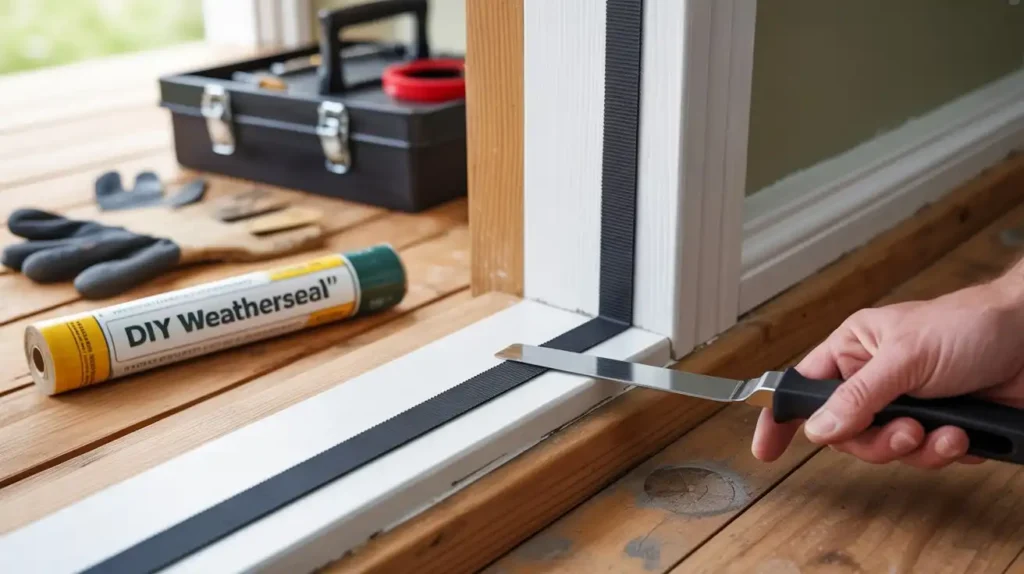
Ease of install ranks high for us DIY crafters. Kerf or self-adhesive options skip nails, perfect for renters or quick flips. Gap size? Measure meticulously—V-strips handle 1/4 to 3/8 inch, sweeps up to 1/2. Budget-wise, start at $10 for basics, splurge $50 on kits for full coverage.
For style? Oh, the fun part. Tinted options—bronze, white, even wood-look—camouflage into your palette. I once stained a vinyl threshold to mimic walnut, tying it to my foyer console. Eco-angle: Recycled rubber strips from brands like Frost King green your game without skimping performance. Test samples; rub ’em, bend ’em. The best? One that seals tight, looks intentional, and whispers “I care about this space.” Trust your gut—it’s led me to winners every time.
Gear Up: Tools and Materials for Weatherstripping Exterior Doors Like a Pro
No epic DIY without the right arsenal, right? Over my projects, I’ve honed a kit that’s foolproof for weatherstripping exterior doors—versatile, compact, and under $50 total if you’re starting scratch. Essentials: A sharp utility knife for clean cuts (swap blades mid-job to avoid tears), measuring tape (36-inch flexible one for curves), and a rubber mallet for tapping kerf strips home without marring wood.
Adhesives? 3M Super Weatherstrip Tape for no-mess bonds—holds through storms. Cleaner like Goo Gone zaps old residue; sandpaper (220-grit) smooths surfaces for grip. For bottoms, a drill with 1/16-inch bit secures sweeps. Don’t forget safety: Gloves fend off splinters, knee pads for floor work.
Materials-wise, snag an exterior door weatherstrip kit—includes jamb seals, sweep, and threshold insert for harmony. Add caulk (clear silicone) for corner gaps; it flexes with seasons. Pro insight: Stock extras—10% overage for mishaps. This setup’s turned my garage into a project haven; pack it in a tackle box for portability. With these, you’re not just sealing—you’re crafting with confidence.
Read Also: DIY Headboard Ideas: 15 Easy and Creative Ways to Refresh Your Bedroom
Step-by-Step: How to Replace Weatherstrip on Bottom of Exterior Door
Replacing the weatherstrip on the bottom of your exterior door? It’s the crown jewel of quick wins—seals out 50% of under-door drafts in one go. I did this on my Craftsman bungalow last spring, banishing pollen and chill in 45 minutes. Here’s the playbook, tuned for décor lovers who hate visible scars.
- Assess and Prep. Swing the door wide; shine a flashlight under to spot gaps (aim for under 1/4 inch post-install). Remove old sweep—most slide off or unscrew easily. Clean the groove with soapy water, dry thoroughly, sand lightly. Personal hack: Vacuum crumbs—debris kills adhesion.
- Measure and Cut. Door width plus 1 inch overlap; mark on your new sweep (rubber or brush type shines here). Utility knife slices vinyl clean; for metal, score and snap. Test-fit—adjust for floor contour.
- Install. Align centered, press adhesive backing firm (or screw every 12 inches for rigidity). For kerf bottoms, tap into slot with mallet. Trim flap if it drags—better a whisper than a scrape.
- Seal and Test. Caulk edges for watertight bliss; let cure 24 hours. Close door, run hand along—feel the seal? Wet a finger; no chill means victory. If it sticks, shave flap with scissors.
Décor twist: Opt for a sweep with aluminum track painted to match your door—subtle elegance. I added felt backing to mine for silent sweeps, perfect for late-night entries. Common error: Rushing dry time—patience pays in longevity. This fix not only weatherstrips your exterior door but elevates the threshold as a design element. Boom—cozy achieved.
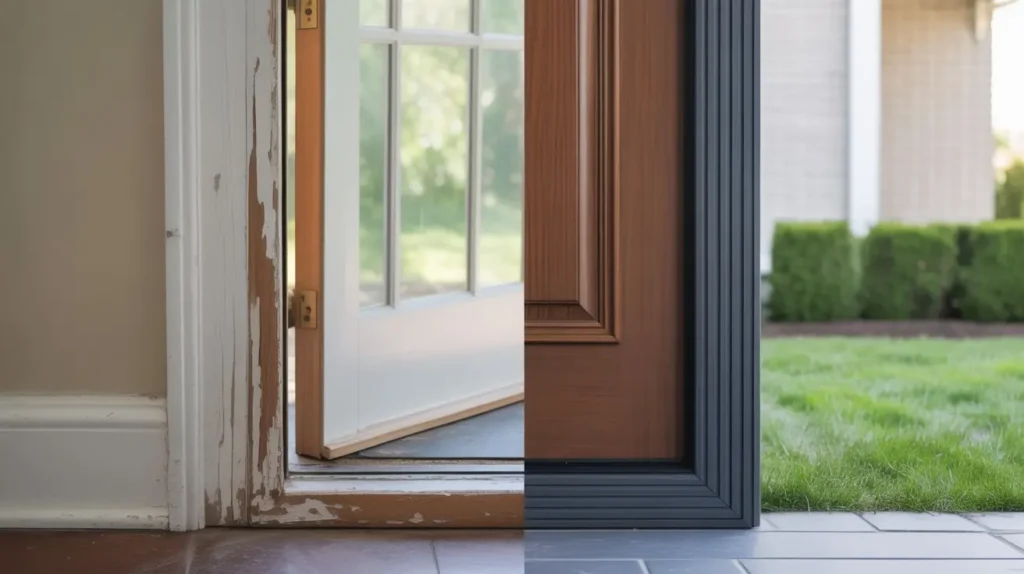
Nailing Exterior Door Jamb with Weatherstrip: A Foolproof Install Guide
The jambs demand finesse—it’s where style meets seal on your exterior door jamb with weatherstrip. I’ve weatherstripped jambs on everything from sleek sliders to ornate doubles, and the key? Precision layering for that invisible barrier. Expect 60-90 minutes; tools from earlier kit suffice.
Start by removing old strips: Pry gently with a flathead, avoiding frame gouges (I’ve scarred a few beauties). Clean kerfs or surfaces—alcohol wipes banish oils. Measure each side (height + 2 inches top overlap), cut V-strip or foam to spec.
For kerf jambs: Compress the bulb, insert into channel starting top-center, work down. Mallet taps secure it; I use painter’s tape to hold while setting. Adhesive types? Peel, stick, roll with a J-roller for bubble-free bonds. Top seal first—miter corners at 45 degrees for pro seams, caulk ’em flush.
Test midway: Close door, check compression—even across. If gaps persist, layer thin foam shims. For arched jambs, heat-vend V-strip for curve-hugging. Décor pro: Choose flocked pile in earth tones—it softens light leaks while echoing linen curtains.
Final polish: Paint over if needed, blending seamlessly. In my sunroom redo, this turned a noisy nook quiet, drafts gone. Troubleshooting? Loose fit means wrong depth—swap for thicker. This install transforms weatherstripping exterior door into artful engineering.
Securing Your Exterior Door Threshold Weatherstrip: Step-by-Step Mastery
Threshold weatherstripping ties it all— the base that kisses your bottom sweep. Adjustable ones are gold for uneven slabs; I’ve leveled three entries this way, preventing water wicking.
Prep: Unscrew old threshold (usually 4-6 screws), lift out. Level check—shim if off by more than 1/8 inch. Clean sill, apply sealant bead.
Cut new to width (door plus 1/2 inch sides). For clip-in gaskets, slide into groove; screw-down models anchor every 8 inches. Raise adjustable riser to meet sweep height—test close for kiss, not crush.
Caulk perimeters, tool smooth for rain runoff. Cure time: Walk lightly for 48 hours. Style it: Hardwood veneer thresholds mimic flooring, a décor dream for open-plan homes.
Insight: In flood-prone spots, add a dam lip. This seals your system airtight, as I learned post-basement scare.
When Your Exterior Door Won’t Close with New Weatherstripping: Quick Fixes
New weatherstripping, old door drama—I’ve been there, jamming a too-thick seal and cursing. If your exterior door won’t close with new weatherstripping, breathe: It’s fixable in 10 minutes.
Cause one: Over-compression. Solution: Opt thinner profiles (1/8 inch max) or trim excess. Hinge tweak—loosen top screws, shim forward 1/16 inch.
Swelling wood? Plane bottom edge lightly. For thresholds, lower riser incrementally. Test with paper—can’t pull free? Too tight; sand frame subtly.
My hack: Warm days install for natural fit. These tweaks restore smooth swing without sacrificing seal.

Stylish Weatherstripping Hacks for Home Décor Enthusiasts
Weatherstripping doesn’t have to hide—lean in for décor magic. Pair bronze V-strips with wrought-iron handles for vintage vibe, or white silicone with crisp shutters for coastal clean. Custom dye foam to match trim; I’ve tea-stained mine for subtle warmth.
Integrate sweeps with rug fringes—brush types weave in texture. Thresholds? Etch patterns or add LED strips beneath for glowing welcomes. For bold: Magnetic strips on metal doors, painted to pop.
These touches make weatherstripping exterior door a style statement—practical poetry.
Shop Savvy: Exterior Door Weatherstrip Kits at Home Depot and More
Home Depot’s exterior door weatherstripping types home depot section? Goldmine. M-D kits ($20-40) cover jambs, bottoms, thresholds—kerf-ready for steel doors. Frost King’s vinyl-clad seals block light too, ideal for media rooms.
Online, Amazon’s Bantie V-shaped kits ($15) soundproof sweetly. Lowes for brushed options. Tip: Read reviews for real-door fits. Stock up—your next project awaits.
Wrapping It Up: Seal Your Way to a Snug, Stylish Home
There you have it—your roadmap to mastering how to weatherstrip an exterior door, from types to tweaks. I’ve poured my scars and successes here; now it’s your turn. Grab that kit, channel your inner crafter, and watch your entryway transform. Questions? Drop ’em below. Here’s to draft-free days and décor that delights.
Bring new life to your home—your next idea is waiting at Heaven Home.