You walk into a room full of bright, sunny yellow and fiery red colors. Patterns swirl around like dancers at a party. These aren’t just any decorations. They’re handcrafts of traditional Mexican folk art decor, treasures that bring stories from distant villages right into your living space. Folk art decor from Mexico: joy and history mixed together, made by skilled people using simple tools, using old ways from indigenous groups and fresh ideas from long ago.
This kind of decoration is not formal or hard to comprehend. It is entertaining and friendly, much like a charming embrace from a companion. One thinks of pots painted with flowers or woven blankets; they’re as soft as clouds. These pieces turn a simple house into one with character all its own. All about interior design in this article, folk art decor for staging your house. General discussion on the history, recommended forms and simple methods of folk art decor implementation will be addressed.
Why Mexican folk art decor at this juncture? In 2025, the global population will be demanding more hand-crafted items that are tangible and culturally related to authenticity. The only way to be able to break away from sameness is by being unique, and this is one aspect to make your home unique in a world full of the same old things. On top of this, it is also environmentally friendly in that it usually uses natural materials – clay, wool, etc. – so, whether you live in a tiny apartment size gothic flat or a rambling mansion, the pieces are apt. We’ll keep it simple – like telling a story around a campfire. By the end you will feel ready to pick your first piece and watch your home come alive with color and charm. Let’s jump in and discover the magic!
Understanding Traditional Mexican Folk Art Decor
Mexican folk art decor is like a peek through a bright world. These are made by hand showing daily life, holidays, and nature with the help of bright shades and fun designs. Not big fancy artworks from big museums but from ordinary folks in small towns, following skills their ancestors knew. This decor fuses ancient techniques of indigenous people, such as making clay or weaving threads, with those of the Spanish arrivals centuries ago. The result? A special mix called mestizo style, full of energy and heart.
Think of craftspeople in Oaxaca or Puebla. They gather materials that are appropriate to the region – river clay, plant dyes, soft wool – and make beautiful things out of them. They don’t decorate in perfection on purpose. Fine wobbles in the lines, or subtle lapses into uneven color: all these reveal that this is the work of human hands, and not a machine. All of which makes each piece one of a kind like a snowflake, really. In today’s fast world, these items remind us to slow down and appreciate simple beauty.
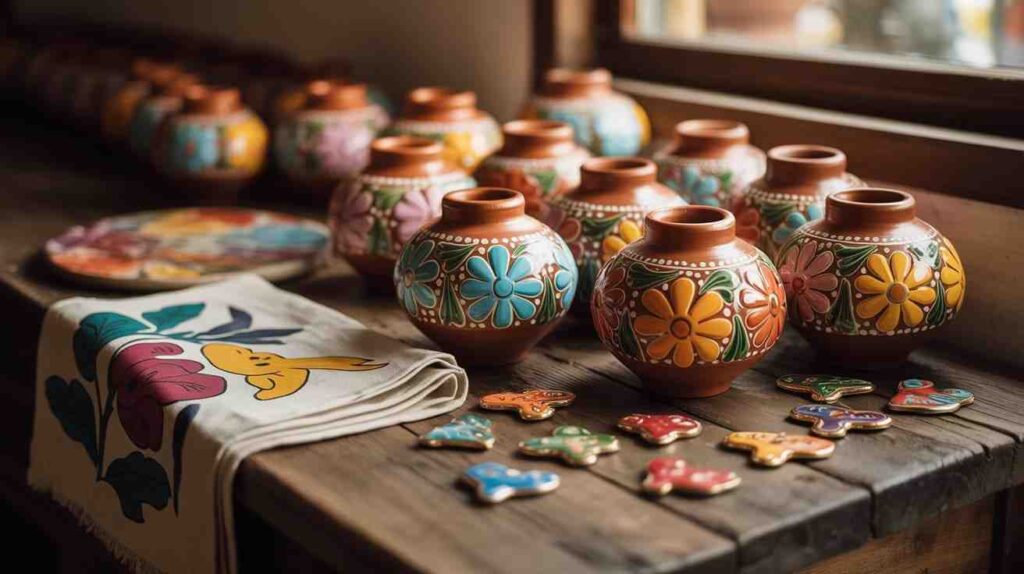
What is it that attracts people to it? Vibrant colors – blue, green, and orange like the night sky lit up with stars. Forms, as a rule, derive from fauna, flora, or signs of luck and progeny. Folk art decoration is a way to incorporate some of the sunshine of Mexico into the interior of one’s home. It is not only to look at; the majority of them are functional, whether filled with fruits or hung as carpets. The combination of beauty and use makes it convenient for any household. The further we move on this, you will find how this decoration design adds heat and amazement so easy for anybody to appreciate, like a spot in forms in the sky on a day of rest.
The History Behind Mexican Folk Art Decor
Let’s go far back in time. Modern Mexican folk art decor started way before modern cities. Between 1500 B.C., the ancient groups of Aztecs and Mayans were creating pottery and textiles for daily usage. The early pieces were simple but very strong with earth tones complemented by nature’s finest motifs. When the Spanish explorers came during the 1500s, they brought bright glazes and metal tools, which were new systems. But the Mexican craftsmen kept their roots very strong, though mixed with European styles but for new and lively ends.
Surviving through the most difficult times of wars and changes, folk art decoration was not lost. It was around the 1800s after their independence when Mexico came to take pride in such arts and crafts. Items that artisans built for festivals included Day of the Dead figures. Well-known artists during the 1900s – such as Frida Kahlo – based their ideas on folk styles by painting lively scenes of ordinary lives. Today, in the year 2025, folk art decor flourishes in markets and online shops all dyed with eco-friendly dyes, given a modern twist but at heart similar to the preservation of tradition by adaptation. Nobody can tell you this better than a history lesson on why a simple woven basket is not just functional but a conduit of brave stories from the past.
Cultural Stories Woven into Folk Art Decor
Every piece of folk art decor in the house tells a tale. The birds on the textile could mean freedom or good news. Trees of life sculptures in clay tell stories, whether from the Bible or ancient myths, with little figures climbing the branches like adventurers. These symbols come from indigenous belief, blended with Catholic tradition, and carry rich layers of meaning.
Families in Mexico pass down these crafts like heirlooms. A grandmother teaches her granddaughter to weave patterns that represent their village’s history. Owning folk art decor connects you to these stories. It’s like having a piece of a festival in your home – think colorful celebrations with music and food. In regions like Chiapas, textiles show Mayan cosmology, with zigzags for mountains and dots for stars. This decor isn’t silent; it whispers about community, nature, and spirit. For kids, it’s a fun way to learn about other cultures, pointing out shapes and imagining the adventures behind them.
Iconic Types of Mexican Folk Art Decor to Explore
Mexican folk art decor is a treasure box of surprises. Each type has its own charm, like characters in a storybook. From squishy clay to soft fabrics, these pieces add playfulness to your home. They’re not stiff or boring; they’re lively and full of personality. Let’s meet the stars, learning what they are, their homes in Mexico, and why they’re loved. It’s like picking toys – start with what catches your eye.
Pottery leads the way. Shaped from local clay in places like Puebla, items like Talavera tiles shine with hand-painted flowers in blues and whites. They’re tough for everyday use but delicate like a bubble.
Textiles are next, warm and inviting. From Hidalgo’s Otomi embroidery with animal designs to Oaxaca’s woven rugs in zigzag patterns, these use wool or cotton dyed naturally. They’re like cozy blankets telling secrets.
Alebrijes steal the show – wild wooden sculptures from Oaxaca, mixing animals like lions with wings in neon paints. They’re fantasy friends for shelves.
Papier-mâché adds lightness: Piñatas or Day of the Dead skeletons hang easily, bringing festive fun.
Lacquerware gleams: Boxes from tree resins, decorated with gold, hold small treasures.
Metalwork sparkles too: Tin mirrors or charms called milagros bring luck, hammered into shapes like hearts or suns.
Each invites curiosity, teaching about creativity without words. In 2025, artisans blend old methods with sustainable practices, making these timeless.
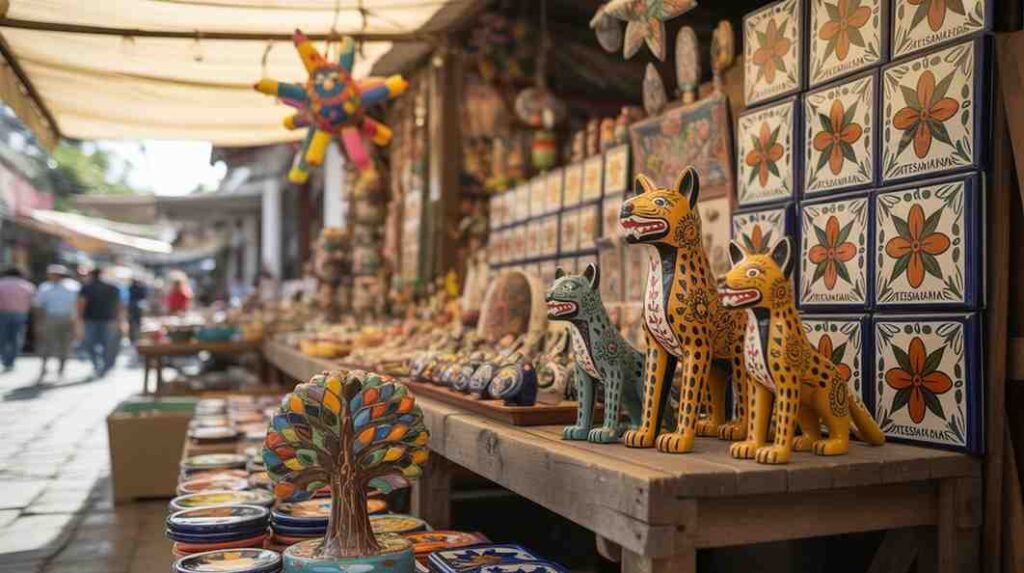
Pottery and Ceramics in Folk Art Decor
Clay comes alive in Mexican pottery. Artisans coil or spin it on wheels in Michoacán, glazing with earthy colors. A vase might hold flowers, bringing the outdoors in. Talavera from Puebla is famous for its bright patterns, safe for food and water. These pieces are sturdy yet charming with their handmade wiggles. Use one as a centerpiece – it’s like a garden party on your table.
Textiles and Weavings for Cozy Vibes
Fabrics feel like hugs. Rebozos from Chiapas or serapes from Saltillo wrap sofas in bird and star patterns. Dyed with plants, they’re soft and colorful. Layer a rug underfoot for warmth, like walking on a rainbow. These add texture, making rooms inviting.
Sculptures and Carvings: Alebrijes and More
Whimsy rules here. Alebrijes, carved from copal wood in Oaxaca, mix creatures in vivid hues. A dragon-elephant guards your space with a smile. Trees of life tell big stories in clay. They’re light and bold, sparking talks.
Why Incorporate Folk Art Decor into Your Home?
Adding folk art decor is like inviting sunshine inside. It chases away dullness, filling spaces with energy. Each piece is unique, reflecting your taste, not a catalog’s.
Colors lift spirits – vibrant hues spark happiness and ideas, great for play or rest. Research shows they boost mood.
It’s green too: Natural materials last long, reducing trash. Buying supports artisans, spreading good.
Blends with styles: Pair a pot with sleek furniture for contrast. Teaches culture gently to families.
Makes homes feel loved, a cozy spot for memories.
Read Also: How to Style Your Home Garden – Expert Tips for a Stunning Outdoor Oasis
Choosing and Sourcing Authentic Folk Art Decor
Finding real folk art decor is an adventure. Spot authenticity by uneven edges or natural fades – fakes look too perfect. Start small, like a tin charm.
Prices vary: $20 for small items, up to $200 for bigger ones. Look for artisan labels.
Online: Etsy or Novica link to makers. Shops like Zinnia Folk Arts or DirectFromMexico offer fair-trade picks.
In-person: Markets in San Antonio or LA’s Olvera Street let you chat with sellers. In Mexico, Oaxaca overflows.
Ask origins to support real creators. In 2025, sustainable sourcing grows popular.
Styling Tips: Bringing Folk Art Decor to Life in Every Room
Style like play: Group in threes for balance. Mix textures – smooth with fuzzy.
Colors guide: Earthy bases, bright accents.
Room ideas: Living room with alebrijes on walls. Kitchen tiles for splash. Bedrooms with soft throws.
Rotate seasonally for freshness.

Living Room Transformations with Folk Art Decor
Cluster pottery on tables. Add plants for life. Creates a welcoming hub.
Kitchen and Dining Accents
Blue tiles on walls. Clay jars for spices. Turns meals festive.
Bedroom and Personal Spaces
Embroidered hangings calm. Carvings whisper peace.
Caring for Your Folk Art Decor Treasures
Care is easy. Dust softly weekly. Wash clay in cool water, air dry.
Textiles: Spot clean, shade dry.
Wood: Oil yearly if unpainted.
Store cool and dry. Fix small breaks with glue.
Keeps them vibrant.
Conclusion
Traditional Mexican folk art decor turns houses into joyful homes. From pottery to alebrijes, it adds stories and color. Choose authentic, style simply, care gently. Start today – your space will thank you with warmth and smiles.
Make your home feel special with fresh and unique styling ideas from Heaven Home.